
The Xn Summit is a gathering of Quebec’s digital experience production ecosystem, where your ideas and expertise will shape the future of the association and the industry. In preparation for this exceptional day of strategic reflection, we’re offering a series of inspiring interviews and case studies.
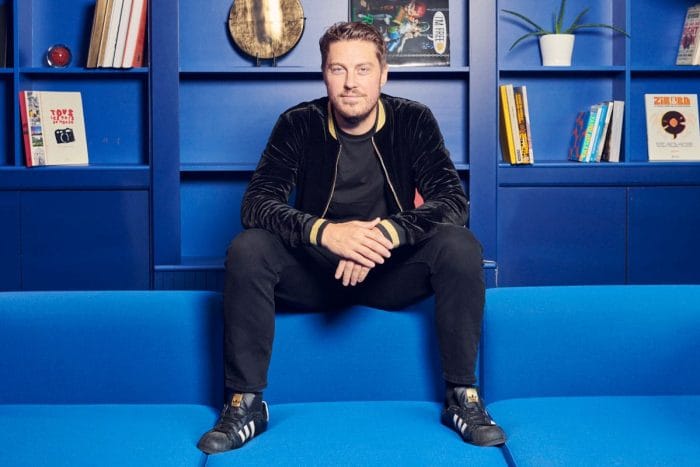
Guillaume Thérien is a managing partner at Triptyq Capital, a “seed-stage venture capital fund investing in disruptive technologies that drive digital entertainment and interactive media.” We met with him to discuss ambition, investment, and innovation. These are three topics that are certainly close to the hearts of Quebec’s digital experience creators.
Enjoy the read!
What motivated you to co-found Tryptiq Capital?
Triptyq was born out of a very clear initial observation: technology is profoundly transforming the creative industries. We are, and remain, at a major technological inflection point, driven by artificial intelligence, spatial computing and 3D, robotics, as well as immersive and interactive technologies. These changes are not marginal: they are redefining the way we create, produce, distribute, and, above all, capture value.
In light of this, we felt it was our responsibility to support local tech-creative entrepreneurs. Quebec and Canada have exceptional creative and technological talent, but without the right capital, it becomes difficult to transform this strength into sustainable leadership. Our ambition was clear: to enable these entrepreneurs to take full advantage of this new wave of technology, to redefine the creative industries, to capture greater value within them, and to maintain a position as a global hub in these sectors.
What gap were you trying to fill in the creative industries ecosystem, and what need were you trying to address?
The main gap lies in funding. Current models are simply not suited to the new realities of the technology-driven creative industries. The available capital is largely public, and therefore highly regimented, procedural, and often structured around reimbursement of expenses. Historically, it was designed for service-based companies, following a logic of production or project budgets.
However, this model severely limits long-term economic benefits. It provides little or no funding for technological development, the creation of intellectual property, commercialization, and, ultimately, the growth of companies.
Triptyq is precisely a response to this observation. We have created a seed-stage venture capital fund dedicated to the creative industries, which invests in companies developing applied technologies. Our approach aims to support product development, assist with market launch, and actively contribute to the creation of technology leaders within the creative industries.
In short, Triptyq exists to bridge the gap between creativity, technology, and capital, but also to empower entrepreneurs in the sector to achieve their ambitions.
What kinds of creative projects or businesses are you most excited about right now?
We are particularly excited about companies seeking to reinvent the content production pipeline, especially by taking full advantage of artificial intelligence. AI is profoundly transforming content creation, post-production, and iteration, leading to major gains in efficiency, creativity, and scalability.
Distribution is another key focus area for us. The rise of the creator economy is redefining consumer habits, whether in entertainment, sports, gaming, or music. We’re seeing a great deal of technological innovation that is accelerating this transition and, above all, reshaping monetization models by bringing creators and audiences closer together.
Finally, everything related to immersive and interactive technologies is generating a great deal of enthusiasm. From recent advances in augmented reality to the boom in location-based entertainment (LBE), and new spectacular formats like Cosm and The Sphere, these experiences are pushing the boundaries of storytelling, engagement, and shared experiences.
In your opinion, does Quebec’s cultural scene celebrate entrepreneurial ambition enough? Are we afraid to be ambitious?
Honestly, no. And it’s not an environment that naturally lends itself to entrepreneurship as we understand it, especially in cultural and creative circles. More broadly, in Quebec—and in Canada in general—we don’t celebrate ambition or major entrepreneurial journeys enough.
For example, Daniel Langlois should be honored in Quebec. In our view, he embodies one of the purest expressions of Quebec’s entrepreneurial ambition and success through Softimage. His legacy deserves to be celebrated with much greater pride. Our entire tech-creative ecosystem—gaming, VFX, and animation—owes him a great deal. And yet, this connection is all too rarely highlighted.
I don’t think it’s a fear of being ambitious in and of itself. It’s more a matter of risk aversion, combined with a lack of skills—and sometimes confidence—when it comes to marketing. Creative ambition is certainly present, but it’s too often disconnected from entrepreneurial ambition. Yet the two must go hand in hand if we want to build sustainable, globally competitive champions.
At what point should a creative company aim for expansion rather than staying in its comfort zone? Is there a risk in staying in one’s comfort zone for too long?
There is no typical or standard path in business. Every company follows its own trajectory. That said, comfort is often the enemy of progress. Staying in your comfort zone for too long can limit opportunities and hinder growth, even for the most talented teams.
Striving for expansion and growth is not just an economic issue. It is also a way to attract top talent, take calculated risks, access new opportunities, and build the company’s value. Ultimately, this is what enables a company to make its own choices, position itself strategically, and continue to innovate. Expansion, when well-planned, becomes a driver of autonomy and freedom for the company.
How can we balance business growth ambitions with a sharp creative vision and a desire to maintain the quality of our projects?
Honestly, I hate that question, because it implies that we have to choose between commercial success and creativity, and there’s a certain condescension in that definition of “project quality.” Historically, there have been times when advertising agencies attracted the greatest creative talent and our creativity was celebrated around the world… all while operating in a fundamentally profit-driven industry.
Let’s take another example: streaming and *House of Cards *. It was a dark political thriller that was rejected by nearly all traditional platforms. Is it a “prefabricated commercial” series? Of course not. This shows that it’s possible to create high-quality, bold, and niche projects while still achieving commercial success.
My point is that there’s an audience for every type of audience, and the real strength lies in falling in love with consumers all over again: understanding what they want, surprising them, and offering them high-quality experiences. It’s by balancing this closeness to the audience with a drive for growth that we can make cutting-edge creativity and commercial success go hand in hand.
How can creative companies innovate beyond the product itself (business models, distribution, etc.)?
It all starts with the intention to do things differently, and this philosophy must be championed by the founders themselves. Without this conviction, it is difficult to turn an idea into a concrete innovation.
Innovation can then manifest itself at several levels: technology, to improve efficiency and competitiveness; business model, to stand out in the market and ensure a sustainable revenue stream; or distribution, to maintain control over customer relationships and create a unique experience.
But innovation alone is not enough. It must be protected and leveraged. Without a strategy for protection and leveraging, it quickly loses its value. This requires intellectual property, strategic partnerships, access to various types of financing and capital, as well as the ability to attract and develop talent and expertise. When these elements are aligned, new opportunities open up, and the company can turn its innovation into a competitive advantage and achieve exponential growth.
Turn inspiration into action at the Xn Summit

Take part in the “Ambition” initiative at the Xn 2026 Summit and help prioritize growth and commercialization in Xn Québec’s strategic directions for 2026–2029.
This text was translated from the original French with the help of DeepL.