
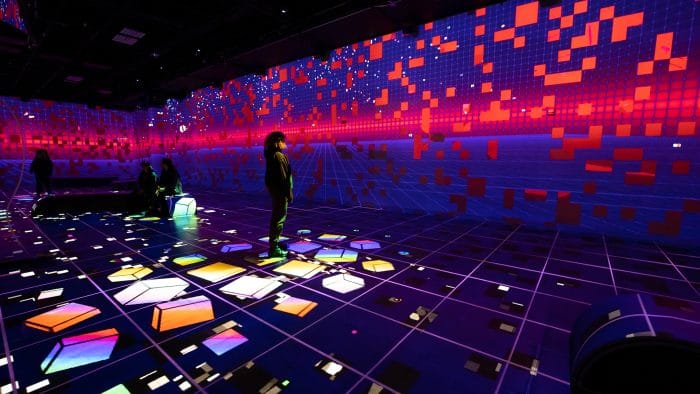
The second edition of the ICA (Immersive Center Alliance) Summit was held in Montreal from May 25 to 29.
As part of this event, nine representatives from immersive venues in eight countries gathered at Oasis Immersion to discuss the commercialization of digital experiences around the world.
The discussion was moderated by two representatives from the strategy firm Habo: Pierre-Luc Gladu, Chief Strategy Officer, and Marie Saadeh, Development and Marketing Coordinator. It’s worth noting that Habo, on behalf of Effet Québec—an initiative of XN Québec—conducted studies on U.S. markets for the deployment of immersive experiences and on the potential of interactive installations in major U.S. and European markets.
A look back at a highly enlightening presentation.
Understanding Target Markets
“The entertainment industries are global. Established players must target multiple markets to ensure their long-term viability and achieve their own goals,” explains Marie Saadeh. “We’re seeing the same phenomenon with immersive experiences, where the sector is growing, maturing, and projects are gaining momentum.”
Indeed, whether we’re talking about exhibitions like *Imagine Van Gogh* or immersive VR experiences like *L’Horizon de Khéops*, or permanent venues such as those created by Meow Wolf, this new form of entertainment is becoming increasingly appealing to the general public and is competing directly with other entertainment and leisure options.
“Investing in the immersive experiences sector involves risks. The time spent on development, the scale of initial investments, and the level of certainty regarding the perceived value of an experience from the outset define these risks, which can be identified and quantified as a project progresses,” emphasizes Pierre-Luc Gladu. “It is particularly with this in mind that we support our clients to align creative success with commercial success.”
There are a multitude of factors to consider when developing an effective marketing strategy for immersive experiences. As part of their presentation, Habo invited participants to focus on four key questions:
Market Potential
To assess the number of potential customers for an immersive experience, a key first step is to quantify and characterize the addressable market. Even major entertainment hubs such as Los Angeles, New York, London, and Paris comprise several distinct markets with very different characteristics.
Habo presented its approach to market analysis, which involves segmenting the total population and tourist flows into several categories, ranging from the total addressable market (TAM) to the actually accessible market (SOM). This approach makes it possible to identify more precisely the most suitable location for an immersive experience.
In some urban centers, the complexity of the transportation system or travel time limits market potential. There are also significant variations in the behavior of entertainment consumers and their relationship to transportation. While in some markets the psychological threshold is around 45 minutes of travel time, in others it can extend to 1 hour and 15 minutes.
The same is true when it comes to interest in immersive experiences. Despite being a rapidly growing sector, awareness and acceptance have not yet reached maturity. As a result, the level of interest varies greatly from market to market. Markets such as Singapore, relative to their population size, outperform Tokyo.
Beyond identifying areas of interest for an immersive experience, Habo emphasized the importance of understanding the appeal of the content itself, which is shaped by four key factors: the theme of the experience and the use of existing intellectual property (IP), the immersive journey and visitor experience, the level of engagement, and the technology.
By understanding how each of these factors influences interest, creators can determine whether an experience is aimed at a mass audience, a niche audience, or a very limited audience.
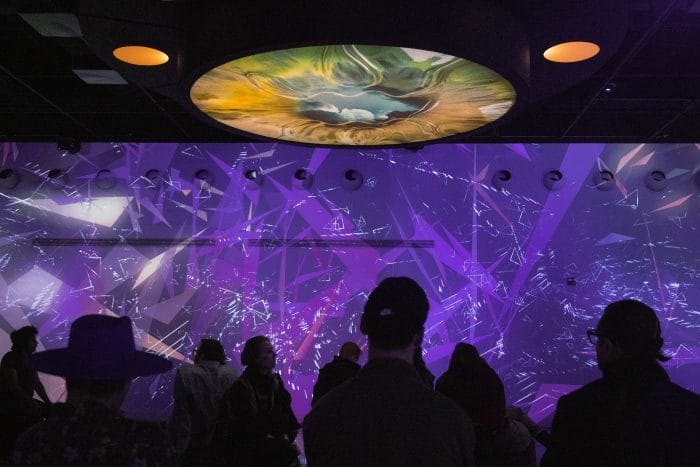
The Purchase Decision
To clearly identify the key elements to focus on during the development, production, and marketing of an immersive experience, it is advisable to assess the factors that influence the purchase decision.
It is important to examine the motivational factors that influence the consumer decision-making process in order to guide product design and communication strategy.
By analyzing the specific motivations of entertainment audiences in a given market, Habo is able to determine where to focus its marketing efforts in order to maximize the commercial potential of an experience.
The Right Price
In addition to these important factors, there’s the unavoidable issue of price…
Understanding the factors that influence how consumers perceive the value of immersive experiences is essential for setting competitive pricing that aligns with demand. Habo also shared its own data on the psychological price of various subcategories of LBE-style immersive experiences among entertainment audiences.
Trends to Watch
The Habo team concluded its presentation by giving the immersive theater operators in attendance a glimpse of the trends supported by their observations, market validation, and shifts in demand across major entertainment markets. In fact, Pierre-Luc Gladu and Marie Saadeh identified four trends to watch in the sector:
This text was translated from the original French with the help of DeepL.